


Maru Japanese Wooden Bowl – Rice and Soup

Couldn't load pickup availability
Production, Delivery & Returns
 Order
Orderconfirmed
 Shipped
within 48h
 Delivered to your home within 5 to 10 days
Guarantee & Refund
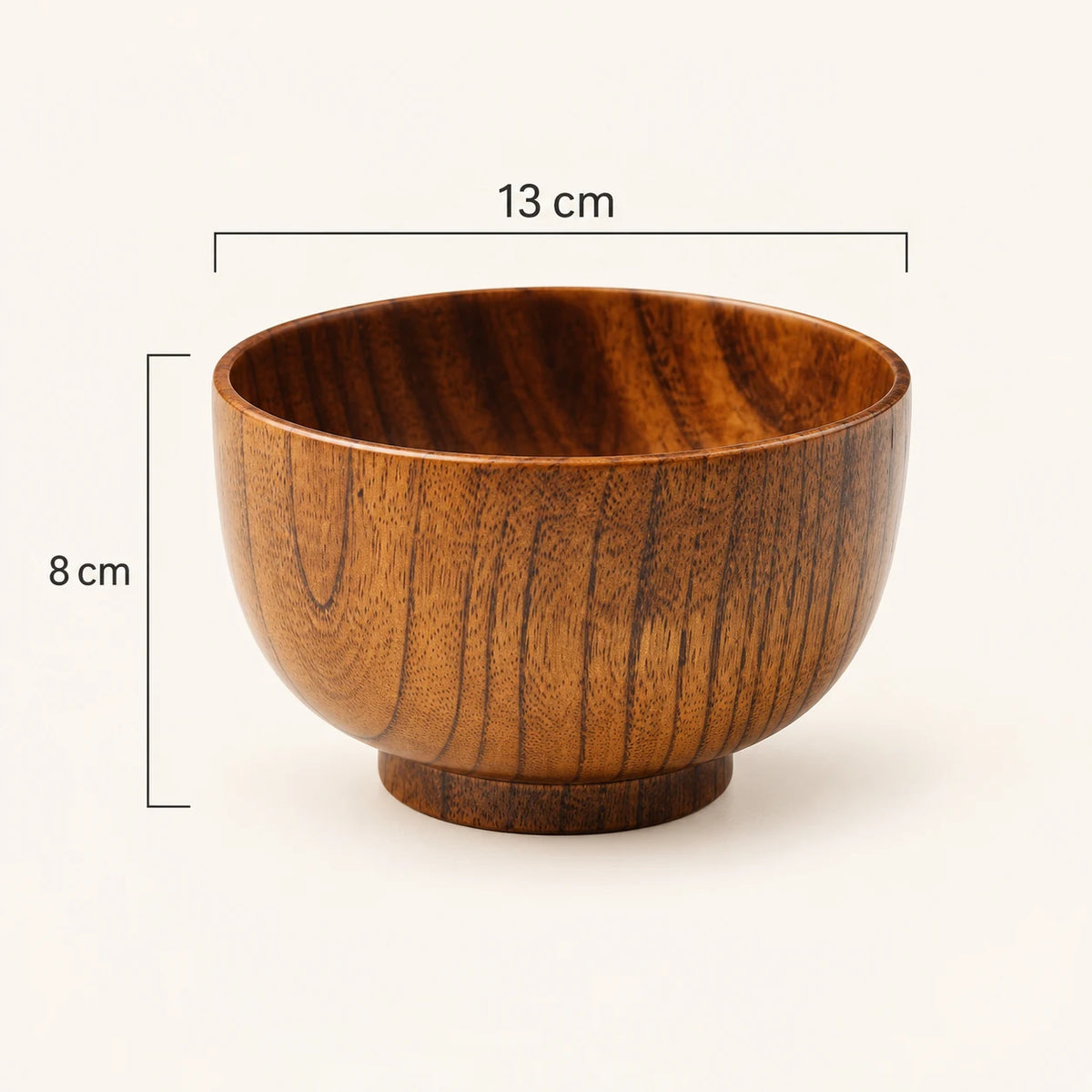
The Maru Japanese wooden bowl is turned from solid wood with a visible grain, then lacquered. Light enough to be held in the hand as custom has it in Japan, it stays comfortable to hold even full of hot soup. Available in two sizes: 260 ml for rice and side dishes, 460 ml for a generous soup or a donburi.
- Two sizes: 260 ml and 460 ml
- Solid wood, lacquered, natural grain visible
- Light: 125 g and 175 g, held in one hand
- Will not shatter the way ceramic does
- Every bowl is unique: the grain changes from one piece to the next
- Hand wash only
● Two sizes, two uses
In Japan you do not eat from a single large bowl: the table is made up of several small vessels, each with its own role. The two Maru formats follow that logic.
| Size | Diameter | Height | Capacity | Weight | What for |
|---|---|---|---|---|---|
| Small | 11 cm | 6.7 cm | 260 ml | 125 g | Rice, miso soup, side dishes, a child's portion |
| Large | 13 cm | 8 cm | 460 ml | 175 g | Donburi, a generous soup, salad, morning cereal |
● A bowl made to be held
In Japan the rice bowl does not stay on the table: you lift it and hold it in your left hand through the meal. That is why it has a foot — your fingers rest under it — and why it has to stay light. At 125 and 175 g, the Maru bowl is held without effort.
Wood has an advantage ceramic does not: it is a poor conductor of heat. Scalding soup does not make the bowl impossible to hold, and the contents stay hot longer. To the touch the wood stays warm, never cold the way porcelain is straight out of the cupboard.
● Every bowl has its own pattern
Each piece is cut from a different part of the wood: the grain, the tone and the weight vary slightly from one bowl to the next. No two are identical, and the one you receive will not look exactly like the photograph.
This is not a manufacturing flaw, it is what separates wood from a moulded piece. The darker veins running across the bowl, the shifts of brown between the rim and the foot: that is the pattern of the original wood, held in place by the lacquered finish.
● At the table
- Rice, the Japanese bowl's first use — the 260 ml size matches a standard portion.
- Miso soup, served scalding: the wood stays holdable in the hand.
- A donburi — rice topped with meat, fish or vegetables — in the 460 ml size.
- Small side dishes: pickled vegetables, edamame, seaweed salad.
- Breakfast, cereal or fruit, for a change from an earthenware bowl.
● Build your Japanese table
The Maru bowl sits naturally alongside the rest of our Japanese tableware range, and pairs with personalised Japanese chopsticks engraved with everyone's name. Browse all our Japanese bowls and our Japanese gift ideas too.
● Caring for your wooden bowl
- Hand wash in warm water, with a soft cloth or a non-abrasive sponge.
- Dry it straight away: do not leave the bowl to drain on its own.
- No soaking — the wood swells and eventually splits.
- No dishwasher, no microwave.
- Away from heat: oven, hob, radiator, direct sun.
- Now and then, rub in a little neutral food-safe oil to nourish the wood.
● Specifications
| Material | Solid wood |
|---|---|
| Finish | Lacquered, grain visible |
| Colour | Natural brown |
| Small size | Diameter 11 cm · Height 6.7 cm · 260 ml · 125 g |
| Large size | Diameter 13 cm · Height 8 cm · 460 ml · 175 g |
| Use | Rice, soup, donburi, side dishes |
| Care | Hand wash, no dishwasher, no microwave |
| Note | Grain and tone unique to each piece |
● FAQ: Japanese wooden bowl
Which size should I choose?
The small one, 260 ml, matches a standard portion of rice or a miso soup. The large one, 460 ml, suits a donburi, a more substantial soup or a bowl of cereal. Many customers take both — that is the logic of a Japanese table.
Can it go in the dishwasher?
No. The heat and detergents of a dishwasher dry the wood out and attack the lacquer. Hand washing in warm water followed by an immediate dry is all it needs.
Can I put hot soup in it?
Yes, and that is one of its strengths. Wood is a poor conductor of heat: the bowl stays holdable while the soup is still scalding, and the contents cool more slowly than in a ceramic bowl.
Can it go in the microwave?
No. A microwave heats the moisture held inside the wood and can split it. Reheat the contents in another dish, then pour them into the bowl.
Why are the bowls not all identical?
Each bowl is cut from a different part of the wood. The grain, the tone and the weight therefore vary slightly from one piece to the next. That is the nature of solid wood, and the one you receive will not be exactly the one in the photograph.
What wood is it?
A solid hardwood with a brown tone and a pronounced grain, protected by a lacquered finish that seals the wood and brings out the veins. As each piece comes from a different part of the wood, the shade and pattern vary slightly from bowl to bowl.
Is it suitable for children?
The small size suits a child's hands well: it is light and, unlike ceramic, it does not shatter if it falls. As with any bowl, it should be handled under supervision when the contents are hot.
Can the wood split over time?
Not if it is looked after. What splits wood is long soaking, the dishwasher, the microwave and sudden changes of temperature. Avoid those and a solid wood bowl lasts for years.
What is a Japanese rice bowl?
It is called a chawan. It is an individual bowl, smaller and taller than a Western one, with a foot. Everyone has their own at the table, and it is held in the hand during the meal rather than left sitting down.
How do you hold a bowl the Japanese way?
You lift it with your left hand, thumb on the rim and the other fingers under the foot, and eat with your right hand using chopsticks. Leaning over a bowl left on the table is, by contrast, considered careless.
Is this bowl made in Japan?
No. It takes the shape, the proportions and the use of the Japanese rice bowl, but it is not made in Japan. We would rather say so plainly than leave any doubt.
Does it make a good gift?
Yes. A wooden bowl lasts for years, gets used every day, and raises no question of size or taste. Paired with a set of chopsticks, it makes a simple and complete present.


Japanese Ceramic Bowls
-
Japanese Bowl New
Regular price $69.90Regular priceUnit price per$69.90Sale price $69.90 -
Fuji Ramen Bowl New
DEALRegular price $49.90Regular priceUnit price per$69.90Sale price $49.90Sale -
Kawaii Animal Head Bowls
Regular price $49.90Regular priceUnit price per$49.90Sale price $49.90 -
Mizumi Bowl Set New
Regular price $69.90Regular priceUnit price per$69.90Sale price $69.90


